
Prepare a Hair Donation Before the First Cut
If you want to donate your hair, choose the receiving programme and read its preparation rules before the haircut begins. Hair collected from the floor afterwards may not be usable. For Angel Hair For Kids, the donation must meet its length and condition requirements and be secured in a braid or ponytail before it is cut.
Name the receiving programme before measuring
“I would like to donate it” is a generous intention, but it is not yet an instruction the stylist can follow. Identify the organisation receiving the hair and bring its actual guidelines. Different names and old social-media posts can circulate together, so make sure the instructions belong to the programme you have chosen.
The Angel Hair For Kids guidelines require a minimum donated length of 12 inches. They permit curly hair to be pulled straight for that measurement. The length is a condition of acceptance, not a suggestion to round a shorter ponytail upwards because the haircut is already booked.
Condition matters too. The programme accepts slightly coloured or grey hair, but excludes bleached or permed hair. Its list also excludes wigs, extensions, synthetic hair and certain other materials. Tell the stylist what has actually been done to your hair rather than assuming that a natural-looking colour proves the donation meets the rules.
If you are uncertain about a treatment or the condition of the hair, ask the receiving programme before cutting. That enquiry is easier while the intended donation is still attached and the appointment can still be adjusted. Do not rely on a different charity’s acceptance policy to settle what this programme will use.
Leave enough hair on both sides of the planned cut
The donation length and the style left on your head have to fit the same haircut. Measuring enough hair to donate does not automatically mean you will like what remains. Discuss the intended final shape with the stylist before positioning ties or scissors, allowing the donor’s preference to remain part of the decision.
For example, if someone wants to keep a particular amount of length, the stylist needs room for that retained hair as well as the full qualifying donation. A measurement taken from the scalp to the ends is not automatically the length that will be removed. The actual cut position determines the donated section.
For a child making a donation, include the child in the style decision at a level they can understand. A charitable purpose does not make their preference about a short haircut irrelevant. It is reasonable to wait and grow more hair if the current length cannot provide both an acceptable donation and the finish they want.
If you found Angel Hair For Kids through Truly You’s children’s wig page while researching options in Mississauga, put that programme’s name on the haircut booking. Bring its 12-inch and preparation instructions to the stylist. This keeps the planned cut attached to the actual receiving programme instead of a mixture of remembered rules from other donation campaigns.
Wash, dry and secure the donation before cutting
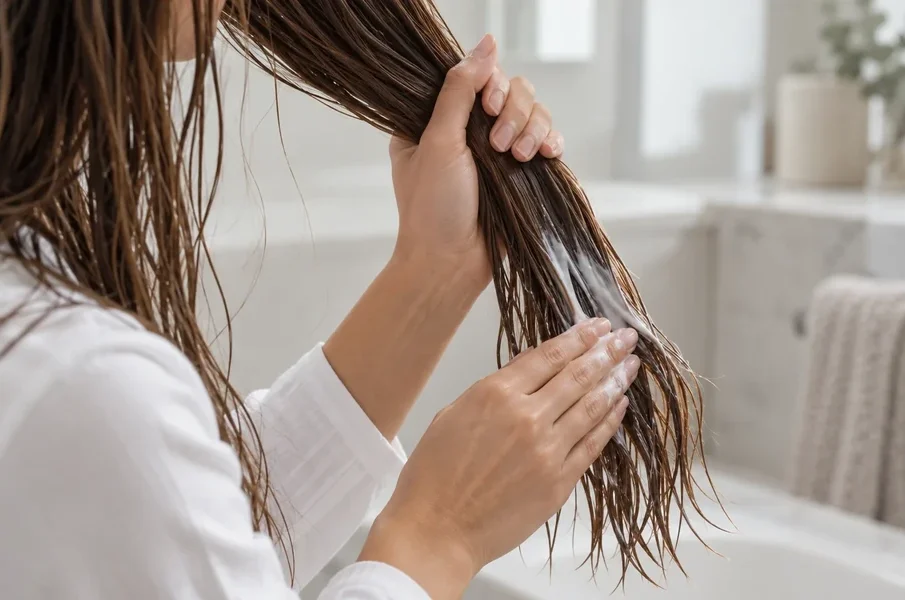
The programme says the hair must be washed and thoroughly dried before it is cut. Do not plan to bag a damp ponytail and finish drying it later. Make the preparation part of the appointment arrangement so that the stylist knows this is a donation haircut rather than an ordinary cut followed by a search for usable lengths.
The hair needs to be placed in a braid or ponytail and secured with a strong tie at both ends. The cut goes above the tie, leaving the donated hair held together. Follow the charity’s instructions rather than cutting loose strands first and trying to reconstruct a ponytail afterwards.
Ask the stylist to show the planned cut and the secured section before proceeding. This gives everyone a final opportunity to confirm the qualifying length and the intended remaining style. It need not become a ceremony or a photograph; it is simply the point at which the haircut and donation preparation should agree.
Prepare the packing supplies as well. The charity calls for the dry braid or ponytail to go into a resealable plastic bag, with separate bunches tied together. Having the bag ready avoids leaving the prepared hair loose among towels, clothing or the rest of the salon’s cut hair while somebody searches for packaging.
Send a prepared donation rather than a promise to one child
Complete the programme’s donation form and include it when delivering or mailing the hair as instructed. Check the current receiving details directly with the charity. An address remembered from an older fundraiser may not be the one you should use now, and a salon’s involvement in a past event does not establish today’s collection arrangements.
Keep expectations about the donation proportionate. You are contributing material to a programme, not commissioning a particular wig for a named recipient. Avoid promising a donor that their ponytail will become one identified child’s finished hair replacement, or asking a receiving family to provide photographs as proof of gratitude.
If a school or group is arranging several cuts, give each participant the same current preparation information before the event. The excitement of the day should not replace individual checks of length and condition. A collection is more useful when the hair is prepared correctly than when the number of haircuts becomes the only measure of success.
The finished result has two parts: a haircut the donor agreed to and a donation prepared in the form the programme can receive. Settle both before the first cut. That lets the contribution begin with usable hair rather than an avoidable question about what to do with it afterwards.