
The Case for Buying One Really Good Tote Bag (And Never Looking Back)
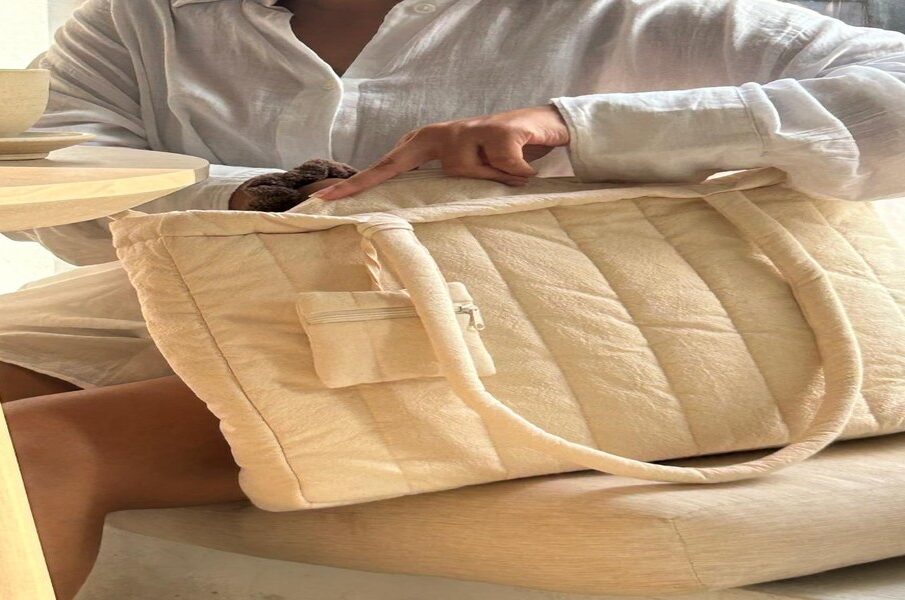
There’s a version of getting dressed that doesn’t involve deciding which bag to carry. It’s the same one, every day, without thinking about it.
At some point in the last few years, the tote bag quietly became the most honest thing in a woman’s wardrobe.
Not because it’s trendy. but because it doesn’t pretend to be something it isn’t. It holds your things. It goes where you go. It asks nothing of you except to be picked up.
And yet, most of us are carrying the wrong one.
The Problem With Most Tote Bags
Walk into any store and you’ll find tote bags made from synthetic materials that look fine for three months and then slowly fall apart at the handles. Or bags that are so stiff and structured they feel like a work assignment rather than an everyday companion. Or, and this is the most common version – bags that were cheap, bought impulsively, and now sit in a corner contributing to a pile of things you don’t quite need but feel guilty discarding.
The problem isn’t the tote bag. The problem is how we buy them.
We buy them as afterthoughts. As add-ons. As the bag-shaped gap in our wardrobe that any bag-shaped object can fill. And so we fill it, repeatedly, with things that don’t last and don’t bring any particular joy.
There’s a better way.
What a Good Cotton Tote Bag Actually Does
A good cotton tote bag does something that sounds simple but is surprisingly rare: it gets better with time.
Not worse. Not just fine. Actually better.
Real cotton, natural and plant-based, softens with every wash, molds gently to your habits, and develops a lived-in quality that synthetic materials simply cannot replicate. The crinkle cotton totes from akiiko, an Indian D2C brand, are a good example of this in practice. Made from 100% natural crinkle cotton, woven and dyed in South India, they’re designed specifically to age the way good things age – with character rather than wear.
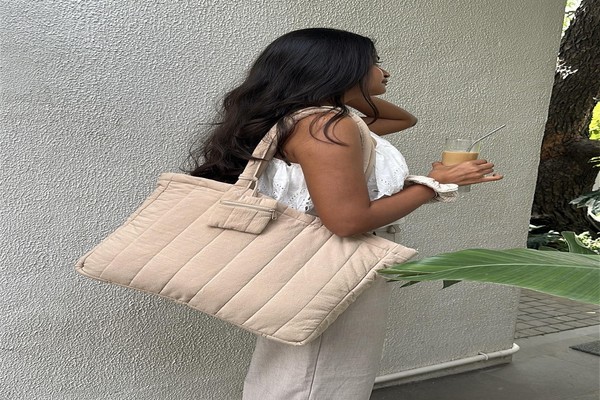
The Crinkle Stripe Tote Bag, one of akiiko’s most reached-for bags, has a padded laptop compartment, a detachable AirPods pouch, and interior pockets but none of that structure feels heavy or clinical. It feels considered. There’s a difference between a bag that was designed to tick boxes and a bag that was designed to make your day slightly easier. This is the latter.
Why Indian Women Are Moving Toward Fabric Tote Bags
There’s a broader cultural shift happening in how Indian women are choosing everyday accessories, and the tote bag is at the centre of it.
For a long time, the default everyday bag for the urban Indian woman was the structured handbag, formal, defined, expensive, and mildly anxiety-inducing to maintain. The tote bag existed as its casual, slightly apologetic counterpart.
That hierarchy has quietly reversed.
Partly it’s practical, the tote holds more, costs less to maintain, and doesn’t require you to think about it. Partly it’s aesthetic – the soft, minimal sensibility that defines contemporary Indian design has made fabric bags feel more intentional, not less. And partly it’s environmental – a washable cotton tote bag used for years is, in every measurable way, a better choice than a synthetic bag replaced every season.
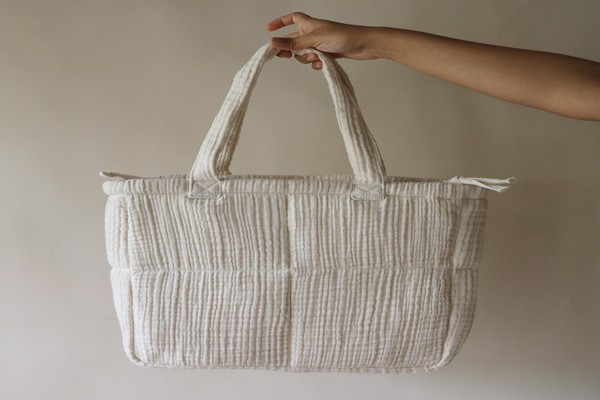
akiiko’s approach to tote design reflects this shift directly. Their bags aren’t trying to look like something they’re not. The Fyra Grid Tote, made from 4 layers of soft muslin cotton, doesn’t have much going on visually – and that’s entirely the point. The beauty is in the texture, the weight, the way it drapes. It’s the kind of bag that makes more sense the longer you look at it, and the longer you carry it.
The Sustainability Angle Nobody Talks About Enough
Every conversation about sustainable fashion eventually gets to tote bags, usually to point out, somewhat gleefully, that a cotton tote bag needs to be used thousands of times to offset its production impact versus a plastic bag.
This statistic is technically true and almost entirely beside the point.
The relevant question isn’t: how many times do I need to use this bag before it becomes ethical? The relevant question is: will I actually use this bag every day for years?

A well-made cotton tote bag that you reach for without thinking, similar to the way you reach for your phone or your keys doesn’t need statistical justification. It slowly just becomes part of your rhythm. It travels with you to the market, to the office, to the airport, to the beach and gradually accumulates the small evidence of a life actually lived.
akiiko makes a point of being explicitly plastic-free, not just in their products but in their packaging. Every order ships without single-use plastic. The brand’s three commitments, consciously created, plastic-free, zero waste – aren’t marketing copy. They’re operational decisions that you can see and feel when the package arrives.
What to Actually Look for When Buying a Cotton Tote Bag in India
If you’re going to buy one good tote bag and carry it for years, here’s what matters:
Material honesty. Look for 100% natural cotton,crinkle cotton, canvas, muslin, or terry. Avoid bags described as “cotton blend” with synthetic linings unless you’ve read exactly what that lining is and why it’s there.
Washability. A bag you can’t wash is a bag you’ll replace. The best cotton totes are hand or machine washable, this is a non-negotiable feature for something you carry every day.
Structure without stiffness. The bag should hold its shape when full but not feel rigid when empty. Crinkle cotton and quilted cotton strike this balance better than most materials.
Useful organisation. At least one interior pocket, preferably a zipped one. A bag that requires you to excavate to find your keys is a bag that quietly frustrates you every single day.
A size that matches your actual life. Not the life where you travel light and carry a slim novel and a single set of keys. Your actual life – laptop, charger, water bottle, snacks, three things you needed to return but haven’t gotten around to yet.
One Bag, Many Days
The best argument for a good cotton tote bag isn’t environmental or economic, though both hold up well. It’s simpler than that.
There’s a particular kind of ease that comes from owning one thing that works. One bag you don’t have to think about. One bag that goes with everything because it’s not competing with anything. One bag that will be softer and more familiar a year from now than it is today.
That’s worth buying carefully.