
How to Choose the Best Long Distance Bracelets for Your Relationship
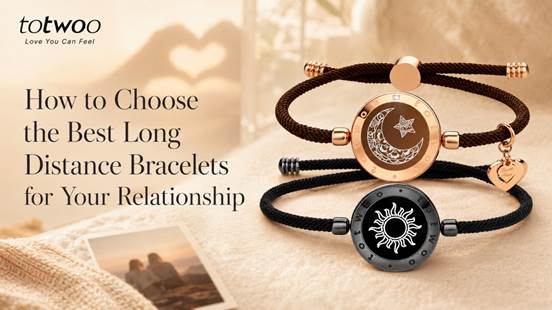
Long-distance couples already have plenty of ways to communicate. They can text, call, share photos, or schedule video chats. What those tools cannot always provide is a small physical reminder that arrives during an ordinary moment.
That is the appeal of long distance bracelets. Some serve as matching symbols, while others use light, vibration, or touch-connected features to help partners feel remembered across the distance.
The best option is not necessarily the bracelet with the longest feature list. It is the one that matches how both partners communicate, what they are comfortable wearing, and how much charging or app management they are willing to handle.
Comparing the Four Main Types of Long Distance Bracelets
Before selecting a bracelet, it helps to understand the practical differences between traditional matching jewelry, light-up bracelets, vibration wearables, and touch-connected smart bracelets.
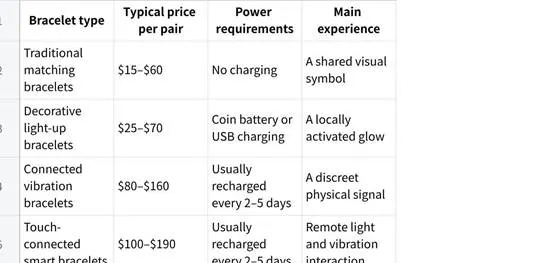
These are approximate shopping ranges rather than fixed prices. Materials, connected features, packaging, battery capacity, and brand positioning can all affect the final cost.
Traditional Matching Bracelets
Traditional matching bracelets are the simplest and lowest-maintenance option. Each partner wears a related color, charm, bead pattern, engraving, or half of a shared symbol.
Most cost between $15 and $60 per pair and require no charging, smartphone, or app. Common materials include braided cord, stainless steel, leather, glass beads, and natural stone.
This type works well for couples who want a quiet physical reminder of their relationship without adding another connected device to their routine. The tradeoff is that the bracelets cannot send signals. Their emotional value comes entirely from the shared design and the memories attached to it.
Water resistance varies by material. Stainless steel may tolerate occasional splashes better than untreated leather or some plated metals, but buyers should still review the care instructions for the exact bracelet.
Decorative Light-Up Bracelets
Light-up bracelets use LEDs to produce a glow, flash, or changing color effect. They can feel playful during concerts, nighttime dates, parties, or video calls.
Basic models generally cost around $25 to $70 per pair. Some use replaceable coin batteries, while others recharge through USB. Battery life can range from several hours of continuous lighting to several days of occasional use.
The important distinction is whether the bracelets are genuinely connected. Many inexpensive light-up bracelets only illuminate when the person wearing them presses a button. They cannot send a remote signal to a partner.
Couples who want interaction across different cities or countries should confirm that the bracelets communicate through an app or another connected system. Otherwise, they are purchasing coordinated light-up accessories rather than long-distance communication devices.
Connected Vibration Bracelets
Vibration bracelets create a tactile signal that can be felt without drawing much attention. This makes them suitable for people who want to receive a reminder during work, a commute, or a situation where checking a phone would be inconvenient.
Connected models commonly cost between $80 and $160 per pair. Most use rechargeable batteries that last approximately two to five days. Actual performance depends on vibration frequency, connection stability, and notification settings.
Silicone bands are common because they are lightweight and adjustable. Some models combine silicone with stainless-steel components to create a more polished appearance.
Before buying, couples should confirm whether the bracelet requires a nearby phone, whether the companion app must remain active in the background, and whether both users need a reliable internet connection.
Touch-Connected Smart Bracelets
Touch-connected smart bracelets combine symbolic jewelry with remote interaction. Touching one bracelet can trigger a light, vibration, or combined response on the partner’s bracelet.
These models generally cost around $100 to $190 per pair. Battery life commonly falls between two and five days, which means regular charging becomes part of ownership.
Materials range from silicone and stainless steel to natural stones, decorative chains, and jewelry-inspired metal finishes.
The main advantage is emotional flexibility. Couples can create their own meanings for different signals. One touch might mean “good morning,” while another becomes a quiet way to say “I arrived safely” or “I’m thinking about you.”
This type is best suited to couples who enjoy small shared rituals and are comfortable using an app, Bluetooth connection, and internet-enabled smartphone.
Which Type Matches Your Relationship?
Instead of choosing according to the number of features, couples can match the bracelet to the kind of connection they want.
Choose Traditional Matching Bracelets for Simplicity
Traditional bracelets make sense when both partners want a meaningful symbol without charging, pairing, or maintaining an app.
They are also more suitable for people who do not regularly wear electronic devices or who prefer understated jewelry.
Choose Light-Up Bracelets for Visual Interaction
Light-up bracelets are most appealing when the visual experience matters. They may suit couples who enjoy playful accessories, customized colors, or visible signals.
However, buyers should distinguish between locally activated LED bracelets and models that can transmit light signals remotely.
Choose Vibration Bracelets for Privacy
Vibration bracelets work well for people who want a discreet physical reminder. A vibration can be noticed during work or travel without attracting the attention that a bright light might create.
The fit, vibration strength, and reliability of the app connection are particularly important in this category.
Choose Touch-Connected Bracelets for Shared Rituals
Touch-connected bracelets are designed for couples who want to turn small signals into part of their daily routine.
They are most meaningful when both partners actively wear and use them. If one person frequently forgets to charge electronic devices or disables background app permissions, a simpler bracelet may provide a better experience.
Is Totwoo Suitable for Your Daily Habits?
Totwoo is most relevant to couples who want touch-based interaction but still care about how the bracelet looks as jewelry.
Its collection includes silicone, 316L stainless-steel, Milan rope, chain, and natural-stone designs. Pair prices on the official store generally range from approximately $99 to $189, although promotions and individual product prices may change.
Battery Life and Charging
Selected Totwoo models list a battery life of approximately three to five days, depending on usage and settings.
A full charge takes about one hour. This charging schedule may suit people who already recharge watches or wireless accessories regularly, but it could feel inconvenient for someone who wants maintenance-free jewelry.
Materials, Size and Comfort
The Candy Original model uses PC, 316L stainless steel, and silicone. Its adjustable inner circumference is listed at approximately 5.52 to 8.46 inches.
Other Totwoo designs use natural stones, Milan rope, snake chains, braided cords, or metal chains. These options allow couples to choose a style that feels closer to jewelry than a conventional fitness tracker.
Wrist measurement still matters. A bracelet that is too loose may move excessively, while one that is too tight can become uncomfortable during daily wear.
Phone and Connection Requirements
Both partners need compatible iOS or Android smartphones, the Totwoo app, Bluetooth, and an internet connection.
The app also needs the correct background permissions to receive signals reliably. After restarting a phone, users may need to reopen the app and confirm that the bracelet has reconnected.
Totwoo is therefore better suited to couples who regularly carry connected smartphones and are comfortable managing Bluetooth accessories.
Water Resistance and Everyday Care
Totwoo describes selected bracelets as offering waterproof protection for everyday use. However, its product guidance also recommends removing the bracelet before showering.
Buyers should not automatically assume that the bracelet is suitable for swimming or prolonged submersion. Anyone who needs a bracelet for frequent water exposure should review the care instructions and stated water-resistance rating of the exact model.
Who Is Totwoo Most Suitable For?
Totwoo may be a good fit for couples who:
• Want both light and vibration responses
• Enjoy creating private meanings around touch signals
• Prefer jewelry-inspired materials and designs
• Are comfortable charging a bracelet every few days
• Regularly carry smartphones with Bluetooth and internet access
It may be less suitable for couples who:
• Want a bracelet that works without a phone or app
• Frequently disable Bluetooth or background app activity
• Prefer jewelry that never needs charging
• Need a clearly stated rating for swimming or submersion
• Are unlikely to wear and interact with the bracelets regularly
The Best Bracelet Is the One Both Partners Will Use
A traditional matching bracelet may be enough for couples who want a durable, low-maintenance symbol. Decorative light-up bracelets provide a more visible experience, while vibration models offer a private physical signal.
Touch-connected smart bracelets are designed for couples who want to create recurring rituals across the distance. They provide more interaction, but they also require charging, smartphone access, and stable connectivity.
The final choice should reflect both partners’ wrist sizes, preferred materials, daily schedules, charging habits, and communication styles.
When those practical details match everyday life, a small signal on the wrist can become a meaningful part of how two people stay connected.